


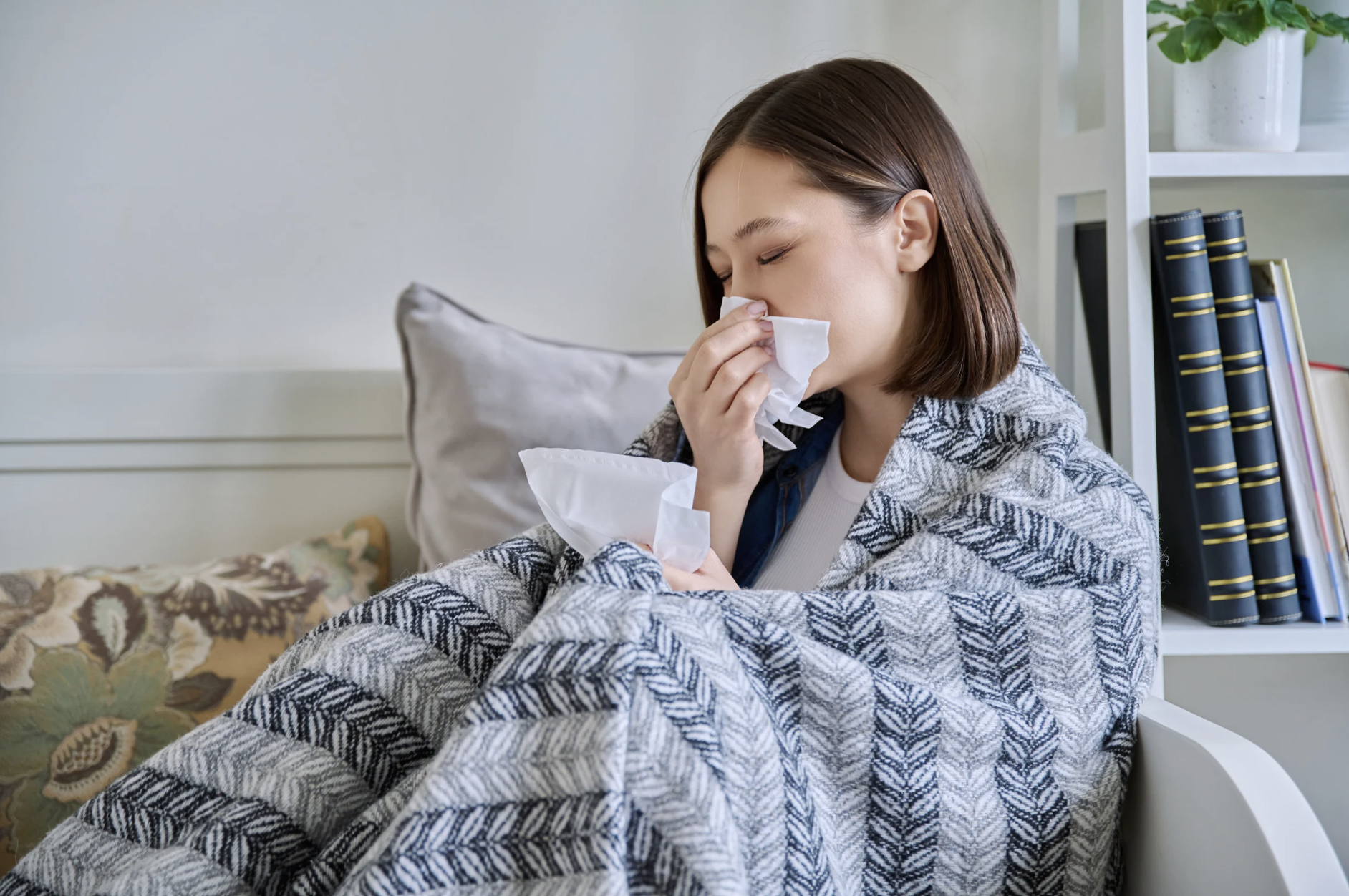
Methods like steam inhalation or light exercise that induce sweating may provide some relief for cold symptoms such as nasal congestion, coughing, and sore throat discomfort. However, this temporary symptom relief doesn’t translate to a faster recovery from your cold.
The common cold has no cure, and there’s no method to eliminate it overnight. For most individuals, a cold takes seven to 10 days to run its course.
The Truth About Sweating Out a Cold
The common cold results from viral infections. You catch these viruses when infected individuals cough or sneeze, releasing viral particles you inadvertently breathe in. While rhinovirus is the primary culprit behind most colds, various other viruses can also trigger the illness.
After viruses enter your system, they start multiplying. Your body responds by launching an immune defense. Certain viral symptoms, including fever, indicate your immune system is actively combating the infection. Research suggests that mild fevers may actually slow viral replication.
This raises an interesting question: if fever helps combat cold viruses, could elevating body temperature through exercise provide similar benefits? Currently, we lack evidence that “sweating it out” meaningfully impacts cold recovery. One hypothesis proposes that temporarily raising body temperature could mimic fever’s infection-fighting effects. Another suggests elevated temperatures might destroy bacteria. Unfortunately, neither theory has scientific validation.
The reality is that no cure exists for the common cold. Once the virus establishes itself and begins replicating in your body, sweating won’t influence it. You’ll only experience improvement after your immune system successfully defeats the virus—a process requiring seven to 10 days for most individuals.
Can Hot, Humid Air Provide Cold Relief?
While sweating out a cold won’t cure it, certain warming activities may ease symptoms.
Inhaling hot, humid air—whether from a warm shower, steam room, humidifier, or vaporizer—can help alleviate cold symptoms like congestion. To prevent spreading your illness, practice these methods at home.
Are Saunas Effective for Cold Treatment?
Unlike steam rooms or warm showers that produce humid heat, saunas generate dry heat. Strong evidence supporting saunas for cold symptom relief or prevention doesn’t exist. A 1990 study suggested sauna visits might prevent colds, but subsequent research hasn’t replicated these findings. A 2010 study found that inhaling hot air in saunas had no effect on cold symptoms.
More recent research on sauna bathing hints at potential health advantages, including decreased respiratory illness risk, though additional investigation is necessary.
Should You Exercise When You Have a Cold?
Exercise increases blood flow, and improved circulation might temporarily reduce nasal congestion. Consequently, some individuals find that gentle exercise, such as walking, helps them feel somewhat better during a cold.
That said, excessive exercise could worsen your condition. Rest and proper hydration are essential for cold recovery. While movement may feel beneficial, avoid pushing yourself too hard right now.
Additionally, stay away from gyms and other public spaces where you might transmit your cold to others. It’s equally wise to minimize additional exposure to other people’s germs.
Understanding Cold Progression
Most people experience common cold symptoms for seven to 10 days. Thinking about your cold in these stages can be helpful:
Early: Following exposure to a cold virus, it begins multiplying in your system. Symptoms typically emerge within one to three days. During this period, you might notice subtle signs like increased fatigue.
Active: After your body launches its immune response, you’ll experience pronounced symptoms including runny nose, cough, and exhaustion.
Lingering: Cold symptoms usually don’t persist beyond 10 days. Contact your healthcare provider if they do. Note that coughs sometimes persist even after other symptoms resolve.
Recovery Strategies for Colds
Once infected, you cannot cure a cold. However, these measures can support healing and improve comfort:
Drink lots of water: Adequate hydration helps reduce congestion and enhances overall comfort. Consume water, tea, and soup to maintain proper hydration.
Rest: Resting allows your body to dedicate energy to fighting the virus. Aim for up to 10 hours of sleep nightly and skip intense exercise.
Humidify the air: Dry conditions can leave nasal passages vulnerable to viruses, making humidifier use beneficial during winter months. When you’re ill, humid air helps ease congestion.
Don’t smoke: Smoking irritates your upper respiratory tract, which is already battling the cold virus.
Unfortunately, substantial evidence doesn’t support common home remedies like vitamin C or zinc for shortening cold duration. Over-the-counter cold medications won’t cure your cold either, though they can improve how you feel and are safe for adults when used according to directions.
When Medical Attention Is Necessary
Most colds can be managed at home. Some evidence supports using certain products for symptom management, including:
- Antihistamines
- Decongestants
- Nonsteroidal anti-inflammatory drugs (NSAIDs)
Discuss over-the-counter medication use with your healthcare provider. You should also seek medical care for cold symptoms if you experience:
- Severe flu-like symptoms (muscle pain, fever)
- Breathing difficulties
- Skin rash accompanying cold symptoms
- Persistent, severe cough that doesn’t improve
Individuals with certain underlying health conditions, such as diabetes or asthma, should consult their healthcare provider about cold symptoms due to elevated complication risks.
Leave a Reply